Seven treasures (linked circles)
七宝 shippō
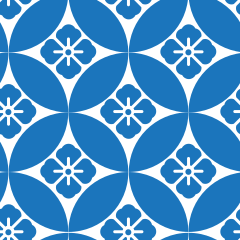
Endlessly linked circles stand for harmony, good relationships and the prosperity of descendants, as precious as the Buddhist seven treasures; auspicious year-round and good for weddings.
Shōsōin textiles, 8th century (Nara period)
The interlocking circles first appear in Japan on textiles in the Shōsōin repository, dated 756. In the Heian period they were applied in cut gold (kirikane) on Buddhist paintings. The name 'seven treasures' refers to the Buddhist list of precious substances; scholars disagree whether the pattern was named via cloisonné (shippō-yaki). In the Edo period it spread to porcelain, metal, lacquer and, as ukiyo-e show, women's kimono.