Family crests
家紋 kamon
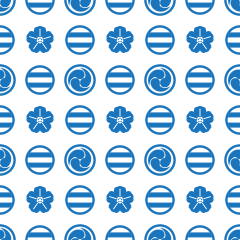
Family crests used as scattered or all-over motifs, often in a quilted or patchwork arrangement; dignified, with a sense of heritage.
Heian period court nobility (around the 10th century)
Crests began among Heian aristocrats, who marked their ox-drawn carriages to show rank. Warriors adopted them on banners, armour and clothing. In the Muromachi period merchants put them on shop signs, and from the Edo period commoners and kabuki actors could choose their own crests, though the imperial chrysanthemum and Tokugawa hollyhock stayed restricted. Some 20,000 or more designs exist.
Crests appear on formal montsuki kimono, gravestones and shop curtains; all-over crest prints are a modern decorative use.