Plover
千鳥 chidori
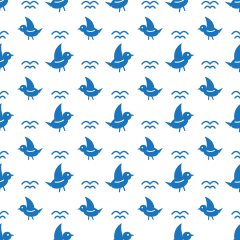
Plovers flying over waves symbolise getting through hardship together. The name reads as 'a thousand birds', a wish to achieve many goals, and it is a summer yukata favourite.
Heian period (10th century onward)
Plovers were a favourite subject of Heian and Kamakura waka poetry; their call was heard as 'chiyo' (a thousand generations), giving the bird its longevity meaning as early as the Kokinshū. The motif appears in textiles, lacquer, metalwork and paper decoration from the 10th century, alone or with waves (nami-chidori) and sandbars. By the Momoyama and early Edo periods it had become the simple, almost abstract bird shape still used today.
Nami-chidori is a classic summer motif on yukata and tenugui.